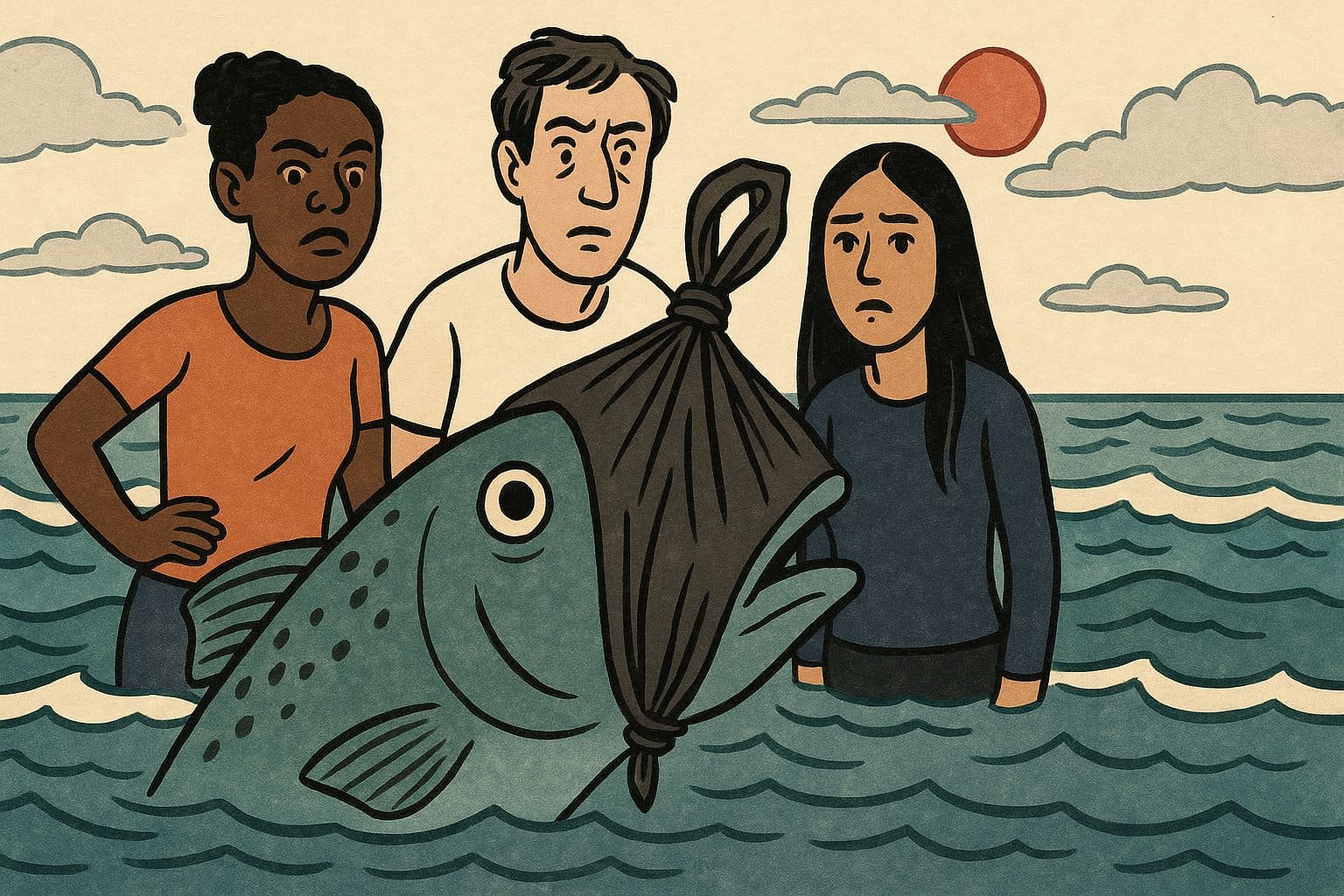
Imagine standing on a beach, watching waves crash in rhythmic perfection, and feeling the pulse of a planet alive beneath your feet. Now picture those same waters gasping for air. Beneath the surface, something invisible is unraveling; a silent collapse few people notice, but one that threatens every life on Earth. Oceans once teeming with vitality are turning eerily still. Plankton shrivel. Fish abandon ancestral grounds. Ancient currents stall. While headlines obsess over wildfires and melting ice, the greatest climate tragedy is happening right beneath the world’s nose: our oceans are suffocating. This is the forgotten climate crisis, and the hourglass is running out of sand.
Quick Notes
- Invisible Disaster: Ocean deoxygenation; loss of dissolved oxygen is rapidly spreading, silently destabilizing marine life and entire ecosystems.
- Human Footprint: Pollution, warming, and nutrient runoff drive “dead zones,” turning once-rich coasts into underwater deserts and disrupting food chains.
- Economic & Social Fallout: Coastal communities, fisheries, and global food security are at risk as ocean oxygen levels plummet.
- Nature’s Tipping Point: Restoration, smarter policy, and innovative tech offer hope, but time is running out to reverse decades of neglect.
- Every Voice Matters: Ordinary citizens can drive change by demanding action, supporting ocean-friendly practices, and keeping this crisis in the public eye.
The Great Unraveling: How Oceans Are Losing Their Breath
Few stories in the climate crisis unfold as quietly and as disastrously as the shrinking supply of oxygen in our oceans. Surface waves sparkle with promise, but hidden below is an emergency unfolding in slow motion. Deoxygenation may sound clinical, but its effects are breathtaking literally. As waters warm and human pollution surges, oxygen vanishes, starving coral reefs, fish, and whales alike. The invisible collapse moves with the stealth of a thief in the night, snatching away the building blocks of marine life.
Scientists refer to expanding “dead zones,” where oxygen has fallen so low that little can survive. The Gulf of Mexico offers a chilling example: fishermen who once filled boats in hours now travel for days, returning empty-handed as entire regions become barren. Marine biologist Dr. Sylvia Earle, who has spent more hours underwater than almost anyone alive, calls these places “the ocean’s silent graveyards.” Her voice trembles when describing once-vibrant reefs now choked in silence.
Rising global temperatures make matters worse. Warm water holds less oxygen, setting off a downward spiral that accelerates as climate change tightens its grip. One oceanographer likened it to “pulling the plug on the planet’s life support system.” As the seas lose their ability to breathe, so do the creatures; large and small that depend on them.
Plankton, tiny but mighty, produce much of the world’s oxygen. Their numbers are falling as oceans become more hostile. One recent expedition off the coast of Namibia saw researchers collecting nets with hardly any zooplankton a stark reversal from only a decade earlier. Without these invisible heroes, entire food webs collapse, setting off chain reactions that ripple up to dinner tables across the world.
The unraveling is not just a scientific oddity. It is an existential threat. While the world obsesses over shrinking icecaps, the suffocation of our seas gathers pace, unseen but unstoppable unless the world wakes up to this crisis.
Choking the Blue Heart: Human Causes Behind Ocean Suffocation
Human hands are wrapped tightly around the throat of our seas. Industrial agriculture dumps rivers of fertilizers into coastal waters, feeding explosive algae blooms that suck up oxygen and suffocate everything in their path. Known as eutrophication, this chain reaction transforms vibrant coasts into toxic wastelands. The Chesapeake Bay in the U.S. was once home to legendary oyster harvests, but decades of nutrient overload turned much of it into a green, lifeless soup. Restoration efforts bring hope, but recovery is slow and fragile.
Sewage and untreated waste flow into rivers and harbors, adding yet another layer of stress. When the city of Mumbai suffered a monsoon flood, entire neighborhoods were inundated by polluted seawater. Fish carcasses washed ashore for weeks, as bacteria gorged on the feast and oxygen vanished. Locals described the smell as “the stench of dying seas.” The aftermath left families with empty nets and a bitter reminder of what’s at stake.
Burning fossil fuels compounds the problem. As atmospheric carbon dioxide rises, so does the temperature of the ocean’s surface. This disrupts natural currents, making it harder for deeper, colder, and more oxygen-rich water to rise and mix. A fisherman in Peru recalls watching anchovy stocks plummet as ocean patterns shifted, his family’s livelihood slipping through his hands. It’s a recurring nightmare playing out across continents.
Plastic waste compounds the suffocation, trapping and poisoning sea life while breaking down into microscopic particles that infiltrate every level of the marine food web. Beachgoers in Bali, once able to scoop up handfuls of tiny shrimp, now pick through a slurry of plastic fragments. Each new tide brings a fresh wave of debris, smothering the life below and strangling the possibility of recovery.
Every action on land ripples out to sea, multiplying the dangers for creatures and communities. Until we break this cycle, the blue heart of our planet will continue to choke, its warning signs all too easy to ignore.
Dead Zones and Desperate Measures: Economic and Human Fallout
The collapse of ocean oxygen is more than an ecological nightmare. It’s a human disaster playing out on every continent. Fisheries feed billions, but as dead zones expand, livelihoods vanish. West African villages, once sustained by thriving sardine fisheries, face hunger and migration as catches dwindle. The boats still line the shore, but the sea has turned silent, leaving families to weigh impossible choices between tradition and survival.
Tourism, another economic pillar, is on shaky ground. Coral reefs, celebrated for their technicolor splendor, are fading to gray as oxygen levels plummet. Snorkel guides in Australia’s Great Barrier Reef remember crowds marveling at fish and coral. Now, too often, they apologize for lifeless vistas and dwindling diversity. The loss is not just visual; it’s financial. Communities that once relied on ocean visitors now confront shrinking incomes and growing debt.
Food security teeters on a knife edge. Shrinking fish stocks drive up prices for protein in poor countries, turning a basic meal into a luxury. In the Philippines, where dried fish is a daily staple, price spikes force families to substitute with inferior, sometimes unsafe alternatives. Stories spread of desperate fishermen risking storms to reach healthier waters, their survival pitted against a capricious, changing sea.
Health impacts ripple outward. In Vietnam, a community near a dead zone suffered from a mysterious illness traced to contaminated shellfish. Children grew sick, and entire neighborhoods shunned local seafood. The fear lingers even after the water clears, a reminder that the health of the sea and the health of humanity are intertwined.
Desperate measures bring desperate innovation. In Sweden, engineers experiment with oxygen-pumping machines to revive lifeless bays. Results are mixed, but hope remains. The stakes are so high that even small victories ignite fierce debates about the best way forward. The story is unfinished and every voice, every effort, counts.
Tipping Points and Turnarounds: Science, Innovation, and the Race to Save Our Seas
Not all hope is lost beneath the waves. Across the globe, pockets of resilience and creativity are challenging ocean suffocation. Scientists and activists deploy new technologies to track oxygen levels, predict dead zones, and intervene before catastrophe strikes. In Norway, satellite data lets fishers adjust routes to avoid hypoxic waters, preserving both catch and ecosystems. The tech revolution is putting life-saving tools in hands that need them most.
Restoration projects are gaining ground. In Chesapeake Bay, oyster farmers plant billions of shellfish that filter water and restore oxygen. Their work, once mocked, is now a case study in how nature can heal itself with a gentle nudge. Community-driven marine reserves, like those in Fiji, let coral and fish recover naturally, boosting both biodiversity and local economies.
Policy shifts make a difference. Coastal cities, from Rotterdam to Cape Town, pass regulations limiting fertilizer runoff and mandating greener sewage systems. These measures face resistance from industry and some politicians, but persistent advocacy is turning the tide. Activist Greta Thunberg’s global movement inspired a younger generation to fight for oceans, not just forests and ice.
Business has a role, too. A Singapore seafood company launched a fully traceable “sustainable shrimp” program, using AI and water sensors to ensure healthy, oxygen-rich farms. Consumers responded with record demand, showing that transparency and ethics can drive real market change.
The race to save our seas is still winnable but only if urgency becomes action, and innovation remains grounded in community wisdom. Scientists, policymakers, entrepreneurs, and ordinary citizens must unite for the blue frontier.
A Citizen’s Wave: How Ordinary People Can Revive a Dying Ocean
The suffocation of our seas may seem distant, but change starts on every shore. Local action, multiplied worldwide, can trigger a wave of revival. Beach cleanups remain powerful; each plastic bag removed gives marine life a fighting chance. In Kenya, volunteer groups walk dawn patrols, collecting debris before tides reclaim it. The work is grueling but meaningful, creating bonds between strangers and restoring hope to battered coastlines.
Every purchase matters. Choosing seafood certified by independent watchdogs puts pressure on fisheries to improve practices. Sustainable brands once a niche market now fill supermarket aisles, but vigilance is key. Shoppers in Spain formed a cooperative to buy only from small-scale, low-impact fishers, supporting families and healthier oceans with every meal.
Education fuels momentum. Schools in the Maldives teach children about marine life, plastic, and ocean oxygen. Students become ambassadors, changing family habits and inspiring neighborhood projects. One 10-year-old’s campaign for refillable water bottles went viral, leading hotels to drop single-use plastics altogether.
Social media gives ordinary people a megaphone. Hashtags like #OceanOxygen and #SaveOurSeas unite activists, scientists, and artists. Viral campaigns pressure lawmakers, companies, and even celebrities to take up the cause. Pop star Billie Eilish filmed a video on an oxygen-starved beach, sparking millions of conversations worldwide.
Every action, no matter how small, chips away at the crisis. The solution is collective. The ocean’s fate hinges on what we do now, and together.
Time to Listen to the Ocean’s Silent Scream
Our oceans are the planet’s heartbeat, yet we treat them as an afterthought; a backdrop to bigger, noisier crises. The warning signs are everywhere, if only we look. Fish once plentiful have vanished. Reefs that dazzled for millennia now sit in ghostly silence. Entire cultures, livelihoods, and futures are tied to waters that are running out of air.
It’s not too late. The world’s oceans have survived asteroids, ice ages, and extinction events. They can recover again but not if suffocation remains a silent crisis. Real change demands that we push ocean health to the top of the climate agenda. It calls on every leader, every business, every citizen to act with urgency, humility, and hope.
So next time you stand at the edge of the sea, remember what’s at stake. The ocean’s silent scream is a call for action; a reminder that the fight for our future is won or lost beneath the waves. The choice to revive our blue planet starts with you.
Will we let the world’s lifeblood run out of air, or will we rise as guardians of the deep? The tides of change are calling. The world must answer before silence is all that remains.
Partnered. Provocative. Worth Your Scroll.
This is a Promoted Post by ESYRITE—yes, it’s paid, but never filtered. Our voice stays raw, real, and razor-sharp. We team up with bold ideas, game-changers, and stories that spark something real. If it’s here, it earned its place—no fluff, just impact. We don’t just promote—we provoke. Stay sharp. Dive deeper.
