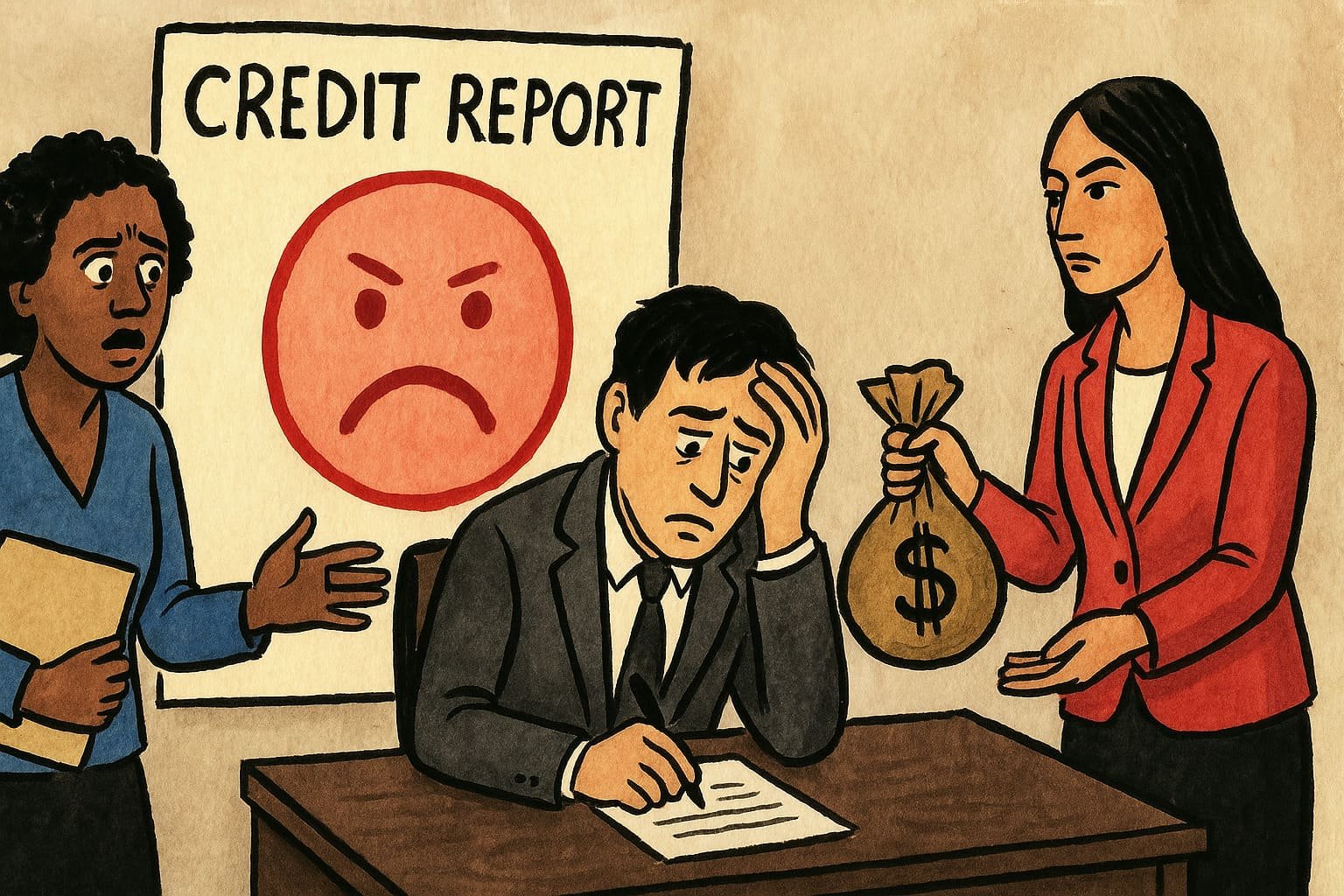
Picture this. You have a vision so powerful it keeps you up at night. A business idea that could crack markets, disrupt traditions, and maybe even change lives. But there’s a problem. Your credit score is trashed. A few bad calls, some missed payments, a recession, or just plain bad luck and now banks look at you like you’re contagious.
Here’s the plot twist most people don’t see coming: Bad credit isn’t the end of the road. It can be the detour to a smarter, grittier, and more resourceful path to business funding. The truth is, credit scores are just one chapter; they don’t define the whole book. And if you read on, you’ll find that even with a bruised financial history, your business dream doesn’t have to sit on the shelf.
This isn’t fluff. These are the raw, actionable strategies that real founders with real struggles used to get funded. It’s time we reframe what bad credit really means not a scarlet letter, but a badge of resilience. This guide will walk you through creative, legitimate loan routes, investor psychology, hidden resources, and proven mindset shifts that transform financial rejection into redirection. Ready for the real game?
Quick Notes
- Credit Isn’t King in All Loan Rooms: There are alternative lenders and creative strategies that don’t rely on traditional credit assessments. Think merchant cash advances, invoice factoring, and relationship-based lending.
- Pitch Power Over Credit History: A compelling business plan can overshadow bad credit. Your story, traction, and revenue model can sway non-traditional investors and microlenders.
- Build Trust Without Banks: Crowdfunding, peer-to-peer platforms, and community loan programs thrive on trust, transparency, and social proof rather than your FICO score.
- Collateral Can Be Your Credit: Asset-backed loans and secured financing options let you leverage what you own instead of your credit history.
- Mindset and Strategy Wins: Strategic planning, emotional discipline, and financial storytelling can rebuild not just your credit but your credibility.
The Credit Score Myth That Keeps Entrepreneurs Poor
Let’s break the spell right away: credit scores are an industry convenience, not a divine judgment. Financial institutions needed a shorthand to measure risk, and thus, a three-digit number was born. But for entrepreneurs, this reductive system often ignores context, ambition, and capacity. Credit reports don’t show the hustle behind the scenes or the cash flow potential of an idea on fire.
Take Keisha Jones, a single mom from Atlanta who built a six-figure meal prep business after being denied by three major banks. Her credit was shot from medical debt. What turned the tide? A $5,000 loan from a local community development fund that believed in her business plan, not her score. That bet paid off. Today, she hires five people from her neighborhood, paying it forward where banks looked away.
Microlenders, CDFIs (Community Development Financial Institutions), and some fintech platforms understand the nuance. They analyze character, traction, and real-world numbers instead of past mistakes. It’s a financial model rooted in possibility rather than punishment. If traditional banks treat you like a risk, it’s time to find rooms where risk looks like potential.
You aren’t alone. Millions of self-employed Americans have imperfect credit, yet form the backbone of local economies. They bootstrap, partner up, pre-sell products, or go lean until funding finally clicks. The barrier isn’t just the credit score; it’s the belief that you need one to start. That mindset is the real liability.
Entrepreneurs aren’t employees. We don’t need HR compliance and spotless paperwork. What we need is cash flow, trust, and a compelling offer. When you shift the narrative from credit to creativity, your options expand. You just have to know where to look and more important, how to ask.
Unorthodox Lenders, Real-World Wins
The myth that banks are the only source of funding has been debunked in boardrooms and bootstrapped basements alike. In truth, traditional banks reject over 80% of small business loan applications with low credit. But where they slam the door, alt-lenders slide open windows. These platforms think differently, and so should you.
Look at Fundbox, Kiva, or Lendio; platforms that evaluate transaction history, invoices, and business performance over personal credit. They don’t ask for perfection. They ask for potential. Entrepreneurs with decent monthly revenue, but lousy credit, have raised thousands using short-term revenue-based loans, repaid automatically as a percentage of future income.
Invoice factoring is another tool ignored by too many. Have outstanding customer payments? Factor them. It’s not debt; it’s acceleration. You get liquidity now while someone else collects later. The same applies to merchant cash advances though the cost can be high, the access is immediate.
Take Maria Alvarez, a salon owner in Austin who rebuilt her brand after COVID. Traditional banks labeled her high-risk. But an equipment lease from an online lender and a peer-to-peer investor pitch gave her $12,000 in capital. She tripled her appointments in six months. Bad credit didn’t stop her; resourcefulness fueled her comeback.
Fintech innovation is leveling the field. Automated underwriting and real-time analytics mean you’re not just a score; you’re a story, a statement of intent, and a future worth investing in. So stop chasing institutions built for predictability. Find ones designed for disruption.
Collateral, Contracts, and Creative Capital
If you can’t borrow based on your past, borrow against your present. That’s the mantra for asset-based lending. It shifts the spotlight from your credit history to what you physically or legally own. Vehicles, inventory, real estate, unpaid invoices; all of it can be turned into a negotiation tool.
This isn’t pawnshop finance. This is strategic leverage. When you can offer security, even subprime lenders pay attention. Contracts can function as currency. If you’ve secured a signed service deal or purchase order, it becomes proof of future income. Show a lender a $30K contract? You’re not broke. You’re pre-rich.
Take Jamal Thompson, a logistics entrepreneur who used his warehouse as collateral to secure a $25,000 expansion loan despite a 540 credit score. His secret weapon? A three-year recurring supply agreement that convinced a lender his business had legs. Within nine months, his fleet doubled and his clients multiplied.
Creative capital is also found in your circle. A partner with better credit, a cosigner, or equity-based deals can replace debt entirely. Consider bringing in a strategic investor who adds more than money; skills, relationships, or industry access. That kind of funding isn’t on your credit report. It’s in your network.
Don’t let a lack of credit make you forget your leverage. Your assets, time, relationships, and traction are all capital. When you reframe the term “loan” to mean “leverage of potential,” the game changes entirely.
Narrative Economics: How Your Story Sells More Than Your Score
Money follows meaning. And no one gets funded without a story. When your credit fails to make the case, your pitch better steal the show. Lenders and investors are still human. They want to believe in something. They want to see fire in your eyes, traction in your deck, and logic in your numbers.
Storytelling isn’t fluff; it’s fiscal strategy. A broken credit history becomes an origin story. A pivot becomes innovation. If you survived five layoffs and still launched your company, that’s not weakness; that’s grit. People invest in grit.
Founders like Sarah Bradley from Chicago have pitched their way past bad credit. She used video testimonials, a transparent breakdown of past debts, and a sharp growth model to win $15K from a local pitch competition. No bank required. What she offered wasn’t collateral; it was conviction.
Your pitch deck should spotlight more than just your business model. Include customer stories, traction graphs, social proof, and clear use-of-funds explanations. Anticipate objections. Answer them with receipts, not excuses.
Narrative economics is real. It’s how Elon Musk raised billions pre-product. It’s how Kickstarter projects get funded on ideas alone. When the math doesn’t yet support you, make the meaning do the heavy lifting.
Building Back Better: Strategic Moves to Reclaim Financial Power
Bad credit is not permanent. But neither is good credit if you don’t protect it. While seeking workarounds, also work on the comeback. You’ll need it for long-term scale, government contracts, and enterprise-level partnerships. Think of it as rebuilding the foundation while the skyscraper goes up.
Start with secured credit cards or credit-builder loans that report positively. Keep utilization under control and never miss a payment. Every dollar repaid is a brick in your financial reputation. It’s slow. But so is compounding wealth until it isn’t.
Automate what you can. Financial discipline isn’t about willpower; it’s about systems. The entrepreneurs who bounce back hardest are often those who create guardrails for themselves. No more late payments. No more blind spending. No more winging it with taxes.
Mentorship accelerates everything. Find financial advisors or small business support groups who know the path. Local SCORE mentors or entrepreneurial bootcamps often provide free credit counseling and loan prep. Don’t do this solo if you can get guidance for free.
Finally, forgive yourself. Bad credit is a circumstance, not a character flaw. Rebuilding it while building a business makes you stronger, not smaller. It creates founders who know how to turn scarcity into strategy. And that’s the founder the world wants to invest in.
From Rejection to Reinvention
If banks said no, it doesn’t mean the market will. If your credit whispers failure, scream back with execution. You’re not alone, and you’re not out of the game. The next wave of founders won’t be those with perfect records, but those with relentless resourcefulness.
Remember, the best entrepreneurs aren’t flawless. They’re fearless. And in a world that funds stories more than scores, your comeback can be your biggest pitch yet.
So here’s the real question: Will you let a number stop your dream or rewrite the rules until it doesn’t?
