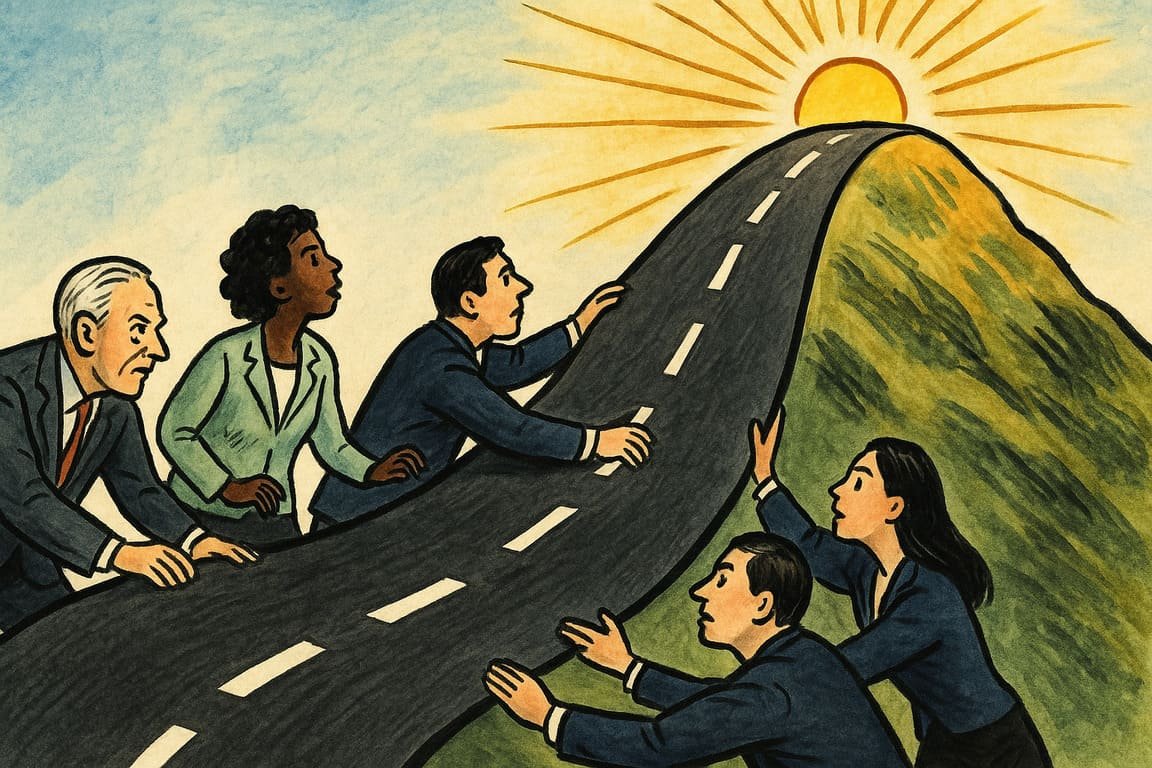
In the shadowed atrium of a high-rise headquarters, a whiteboard stands littered with colorful lines and cryptic arrows. No one notices the janitor pausing to study it, but the map tells the real story: ambition on one side, obstacles on the other, and a thousand winding paths in between. Every major decision, every sleepless executive, revolves around one hope—building a plan that actually works. Somewhere in the city, a newly minted startup founder stares at her own digital roadmap, blinking under the glow of a midnight monitor. No one is watching, but she feels the weight of every pivot and promise. In this world, strategy is not a static slide deck. It is a living organism, evolving as quickly as the chaos outside. Those who master the roadmap, who plan for transformation, end up not just surviving, but thriving for the long haul.
You can feel it whenever uncertainty rattles the boardroom or the market throws a curveball. A clear strategic roadmap is more than just a set of goals—it is a survival instinct, a shield against chaos, and a compass in the storm. Without a living, breathing plan, companies drift, forever reacting to the latest crisis. With it, you get something rare: the confidence to move forward even when the path is hidden. The leaders who invest in mapping every twist, risk, and milestone do not eliminate uncertainty. They just make it work for them.
Practical stories illuminate this truth. Consider Maria, who took over a stagnating publishing house in Lisbon. The old guard clung to tradition, resisting every tech update, until she forced a reckoning. She gathered her skeptics in a windowless conference room and laid out the transformation roadmap: digitize archives, retrain editors, launch experimental online imprints. The first months were brutal. Revenue dipped, tempers flared, but the plan held. A year later, the company reemerged, not only surviving but driving fresh literary trends. Her roadmap was not a magic fix, but a commitment to growth over comfort.
Sustainable growth means more than chasing quarterly numbers. The most resilient companies set their sights on long-term value, building capacity in their people, their platforms, and their culture. In Seoul, a family-run electronics firm turned a 50-year-old legacy into an innovation powerhouse by embracing a five-year transformation plan. Every department got new tools, every team leader received training, and setbacks became stepping stones rather than stop signs. Growth, here, is the outcome of discipline—of showing up for the roadmap even when the journey is slow.
Digital transformation adds fuel to this fire. No plan can account for every market shock or tech disruption, but a flexible roadmap adapts on the fly. A logistics company in Nairobi, once blindsided by supply chain disruptions, rebuilt its entire planning process around scenario analysis and digital dashboards. When competitors panicked, this team adjusted routes, rerouted inventory, and never missed a delivery. The lesson is clear: plans that flex survive, while rigid strategies snap under pressure.
Transformation always tests commitment. It asks teams to trade comfort for curiosity, to question old habits, and to take risks with untested tools. This friction is natural—few people crave upheaval. But sustainable growth rewards those who see every challenge as proof of progress. When teams rally behind a clear roadmap, they weather storms together and celebrate every small win. They stop seeing transformation as a threat and start seeing it as the ultimate edge.
Success stories often hide a messy middle. At a fintech firm in Mumbai, leadership nearly abandoned a major tech upgrade after the first wave of user complaints. Instead, they doubled down on feedback loops and transparent communication, turning a failing rollout into a template for future projects. This is the real value of a roadmap—it guides teams through setbacks and uncertainty, giving them permission to fail, learn, and try again without losing their way.
Culture shifts as the plan becomes reality. Once transformation takes root, people at every level begin to think differently. They spot trends earlier, adapt faster, and trust one another more. When setbacks come, they don’t freeze—they respond with creativity and urgency. The result is a company that not only grows, but endures. Sustainable growth, in the end, is not a destination. It is a habit.
Every roadmap has its blind spots. The best leaders invite challenge, seeking diverse voices to stress-test the plan. At a biotech startup in Boston, executives host monthly “roadmap hackathons,” inviting junior staff to poke holes in strategy and suggest better routes. This culture of questioning transforms the map from a top-down decree into a living, breathing contract. When plans change—and they always do—no one is left behind.
As the city lights flicker and conference rooms empty, the roadmap remains—a silent witness to every risk, every breakthrough. In the hush, the echoes of a dozen team debates still hang in the air, layered with the hope that this time, the plan will hold. The secret, whispered in late-night strategy sessions and scrawled in margin notes, is simple: growth comes not from certainty, but from the courage to move with intention. Each marker on the roadmap is a promise, each turn a test of resolve. The world will always shift beneath your feet. The only question is: will you trust the journey, or wander off the map?
Partnered. Provocative. Worth Your Scroll.
This is a Promoted Post by ESYRITE—yes, it’s paid, but never filtered. Our voice stays raw, real, and razor-sharp. We team up with bold ideas, game-changers, and stories that spark something real. If it’s here, it earned its place—no fluff, just impact. We don’t just promote—we provoke. Stay sharp. Dive deeper.
