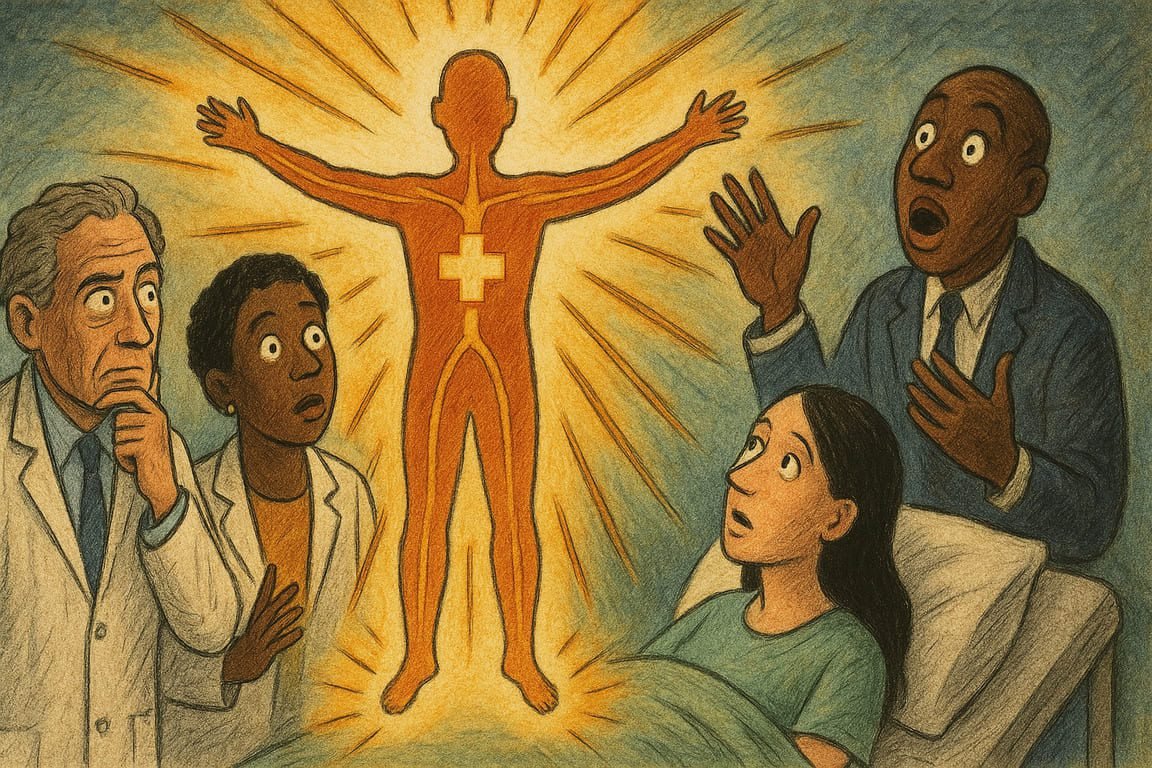
A midnight ambulance races through rain-soaked avenues, slicing past sleeping storefronts and flickering traffic lights. Inside, paramedics fight against seconds, their tools glinting beneath harsh white bulbs. Across the city, a research lab hums with the quiet persistence of scientists charting the unknown, their screens alive with streams of patient data and genomic code. Somewhere else, a weary mother sits in a pediatric ICU, clutching a paper cup, waiting for a miracle technology she’d never imagined. Behind the miracles and headlines, every breakthrough in healthcare is a story of relentless grit, risk, and a refusal to accept “good enough” for an answer. This is a new era, and the revolution is personal.
You see it when your doctor schedules a virtual consult instead of sending you across town. You feel it when an app warns you about a medication interaction before a pharmacist ever glances at the label. The pace is dizzying. Every week, another startup promises to “disrupt” healthcare, but a select few actually deliver. The power of these stories isn’t in their novelty, but in the way real lives are transformed—sometimes quietly, sometimes with a bang.
Think about the first mRNA vaccines. The world watched as two companies, BioNTech and Moderna, took technologies dismissed as “too new” and gambled everything during a global crisis. The science moved with breathtaking speed, but it was the years of “failed” experiments and countless late-night collaborations that turned theory into reality. You may remember the lines at clinics and the relief when a new shot offered hope. Behind every headline, teams of researchers and frontline workers rewrote medical history.
Then there’s the story of Janna, a nurse in Cape Town, who piloted a wearable device that tracks vitals in real time and alerts teams to patient distress. Her hospital saw rapid declines in avoidable complications. At first, the new technology was met with skepticism, even resistance. But after it flagged an early warning for a child in respiratory failure, attitudes changed. The hospital rewrote its protocols, and other clinics called to learn more. One nurse, one device, countless lives changed.
These case studies aren’t confined to billion-dollar labs. Across rural India, small clinics are using portable ultrasound devices that connect to smartphones. A traveling midwife named Ravi uses one to check pregnancies in remote villages. What used to require a city trip and a day’s wages is now possible in a dirt-floored clinic with a mobile signal. The ripple effects are profound: fewer emergencies, more healthy births, trust rebuilt between communities and healthcare providers. Innovation here isn’t about cutting-edge—it’s about accessibility and empathy.
Sometimes, the biggest transformations start with simple questions. In Seattle, a community health center turned its attention to mental health after patient surveys revealed high anxiety and depression rates. Instead of just offering more prescriptions, they created a “Wellness Team” pairing therapists with primary doctors. Patients received coordinated care in a single visit, cutting down stigma and improving outcomes. One patient, Angela, told her provider, “For the first time, I felt seen as a whole person.” This shift sparked national attention and a wave of similar programs. Breakthroughs can start with the courage to listen.
The stories keep coming. A medtech startup in Nairobi developed a solar-powered cold storage unit for vaccines, saving thousands of doses in regions without reliable electricity. The founder, Grace, recalls her frustration watching vaccines spoil in her childhood village. Years later, she returned with an invention that made her community a model for others. Sometimes, revolution is rooted in memory and a promise to do better.
You witness the impact in oncology wards, where AI-driven imaging now detects tumors at stages invisible to the human eye. A radiologist named Tom in Boston still marvels at the precision of these systems. At first, he feared for his job, but now he spends more time with patients, less time second-guessing scans. Technology didn’t replace him—it freed him to do his best work. The result is more than efficiency; it’s dignity restored.
Healthcare’s revolution is not just about gadgets or drugs, but mindsets. In Brazil, a telemedicine startup bridges the gap between rural patients and urban specialists, transforming what “access” means for millions. Maria, a farmer’s daughter, received life-saving advice on a video call, all while her family watched from the porch. What seemed futuristic a decade ago is now woven into daily life.
You may find inspiration in the unlikely. An Icelandic genetics firm mapped a nation’s DNA and discovered unique risk factors for rare diseases. Their CEO, Kari, faced pushback from privacy advocates, but persisted, focusing on transparency and community consent. Today, treatments and preventive care programs across the globe benefit from lessons first learned on those volcanic shores.
The most profound breakthroughs often hide behind the curtain of routine. A pharmacist in Lagos, Olumide, now uses real-time data to predict shortages and avert drug stockouts in his district. With a tap on his phone, he saves lives—not in a blaze of publicity, but in the steady rhythm of ordinary days. Change rarely comes with fireworks. It arrives in small victories stacked together.
If you’re reading this, you are living through the most transformative chapter in medical history. The boundaries between science fiction and daily reality blur more each day. But in the end, the heart of every breakthrough is human—a patient’s hope, a doctor’s hunch, a founder’s refusal to quit. The real revolution is in connection, care, and the courage to imagine something better.
A hospital corridor, quiet before sunrise, glows softly as new shifts gather and exhausted staff pass the baton. A child sleeps, safe, thanks to an invention that was nearly scrapped. In a far-off village, a community gathers around a humming device, grateful for another shot at health. Through every screen, every whisper of hope, the revolution continues—not as spectacle, but as the quiet pulse of persistence.
Those who dare to reimagine the possible now write the future for us all. You, standing on the edge of change, hold more power than you think. So, what will you do with it?
