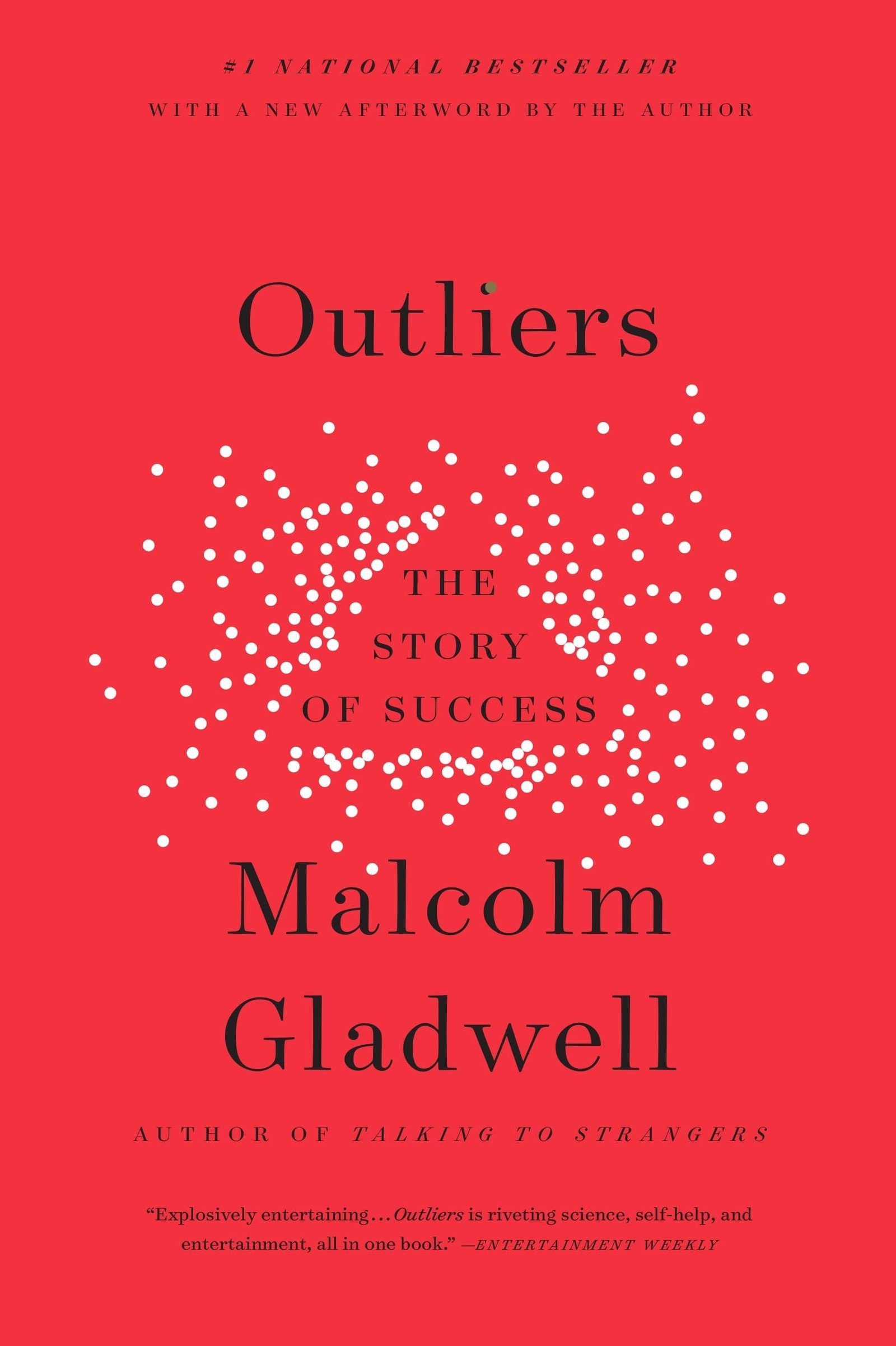
Success stories tend to follow a well-worn script: a lone genius, an unshakable will, and a little bit of fairy dust. But what if everything you thought you knew about success was wrong; dangerously wrong? Malcolm Gladwell’s Outliers: The Story of Success doesn’t just tear that script in half; it burns it, douses the ashes in insight, and hands you a new lens to see the world. In a culture obsessed with self-made millionaires and hustle porn, this book is a masterclass in nuance, context, and uncomfortable truth.
Gladwell doesn’t argue that effort is irrelevant. In fact, he champions discipline; but adds a twist most motivational gurus ignore: timing, opportunity, and culture matter just as much, if not more. Bill Gates didn’t just work hard; he was born at the perfect moment in tech history and had early access to a computer terminal when no one else did. The Beatles didn’t just play well; they played relentlessly in Hamburg nightclubs, racking up 10,000 hours of practice before anyone knew their name. Coincidence? Gladwell says no.
What makes Outliers magnetic isn’t just its research depth or punchy anecdotes. It’s the way it flips the success narrative inside out. We’re trained to celebrate outliers; those who stand far from the average as special. Gladwell contends that they’re not exceptions, but products of hidden systems, timing, and cultural legacies that most people never see. He challenges the meritocracy myth head-on with empirical data and irresistible storytelling.
At its core, the book is a critique of individualism. Gladwell urges us to stop worshipping talent in a vacuum and start interrogating the ecosystems that enable greatness. Think success is about IQ alone? He’ll make you rethink that, too. Instead, he builds a case for context: birth dates, hometowns, family values, and yes, dumb luck, all coalesce into what we call “genius.” And once you see it, you can’t unsee it.
This review will take you through the most captivating ideas in Outliers, while questioning the seductive myths we often cling to about achievement. Whether you’re an entrepreneur, a parent, a teacher, or simply someone trying to get ahead, this book is a psychological and sociological mirror you didn’t know you needed. Let’s slice through the noise and dissect what really separates the great from the good and why it might not be what (or who) you think.
Quick Notes: 5 Mind-Twisting Truths You’ll Never Forget
- Success isn’t just about talent: Natural ability matters, but only when combined with opportunity, cultural support, and timing. Genius, it turns out, is not self-contained.
- The 10,000-Hour Rule holds weight (with a catch): World-class performance in any field typically demands at least 10,000 hours of deliberate practice but access to that practice is where inequality begins.
- Your birth month can affect your future: Gladwell highlights how Canadian hockey stars are overwhelmingly born in the early months of the year, giving them early physical advantages that snowball over time.
- Cultural legacies shape achievement: Where you’re from, how you communicate, and the values you inherit all play significant roles in how far you go and how you’re perceived along the way.
- Privilege is invisible to the privileged: The systems that support “success” often remain unseen by those who benefit from them. Gladwell peels back that invisibility with surgical precision.
The Secret Architecture Behind Every Success Story
Malcolm Gladwell begins *Outliers* with an arresting question: Why do some people rise far above others in the same circumstances? To answer this, he introduces a small town in Pennsylvania named Roseto, where residents mysteriously enjoy longer lives with low rates of disease. The twist? It isn’t diet or exercise; it’s culture, community, and the invisible threads of social structure. Right away, Gladwell signals that this book isn’t about personal hustle; it’s about the hidden scaffolding beneath success.
One of the book’s most iconic frameworks is the **10,000-Hour Rule**. Gladwell argues that achieving mastery in any field demands intense, sustained effort; roughly 10,000 hours of focused practice. But here’s the kicker: not everyone has the opportunity to log those hours. Bill Gates had unusual access to a computer terminal in the 1970s. The Beatles played over 1,200 concerts in Hamburg before they became “The Beatles.” Talent met timing, and preparation met opportunity. It’s a collision, not a solo act.
Gladwell doesn’t stop at individual stories. He expands into sociological terrain with case studies like Asian students and mathematics, tying rice-farming culture to perseverance and attention to detail. He draws fascinating links between cultural legacies and modern-day achievement gaps, dismantling the idea that motivation alone explains educational success. A Chinese rice farmer’s values may shape a student’s patience with algebra in ways few Westerners ever consider.
Another jaw-dropping chapter explores how **birth dates** create systemic advantages. Using Canadian hockey leagues, Gladwell shows how players born in January through March dominate elite rosters. Why? Because they’re older than peers in the same age grouping, making them physically stronger in youth leagues. This advantage snowballs through better coaching, more playtime, and confidence. It’s not talent; it’s timing disguised as merit.
The final chapters return to personal narrative, with a spotlight on Gladwell’s own Jamaican heritage and the class and color privileges that allowed his mother to pursue an education. He brings the story full circle, showing that success stories; his included, are always layered, tangled, and rarely earned in isolation. In *Outliers*, triumph is not just earned; it’s enabled.
Key Lessons and Insights to Learn: Rethinking Everything You Know About “Making It”
The first major takeaway is that individual grit alone doesn’t guarantee greatness. While Western culture romanticizes the self-made person, Gladwell dismantles this myth with chilling clarity. He argues that hard work matters, but without the right ecosystem; access, timing, and cultural support, effort alone won’t yield outlier results. The environment isn’t just background noise; it’s the amplifier or silencer of potential.
Second, the 10,000-Hour Rule underscores the brutal math of mastery, but with an ethical subtext. If high achievers succeed partly because they’ve had more chances to practice, then success is also a product of systemic inequality. Kids from wealthy families can afford music lessons, private coaching, and mentorship. So we must ask: Who gets to accumulate those hours, and who doesn’t?
Third, Gladwell reveals how tiny early advantages snowball into massive long-term gains, often without our awareness. Take the hockey birth-month effect. A child gets picked for an elite team simply for being a few months older, then benefits from better coaching, more confidence, and elite exposure. By the time we crown them as stars, we’ve long forgotten the initial edge. This isn’t meritocracy; it’s institutionalized momentum.
Fourth, cultural inheritance shapes behavior far beyond what we admit. For example, pilots raised in high power-distance societies may avoid questioning authority, even in life-or-death cockpit situations. Korean Air’s past crash rates weren’t just technical failures; they were linguistic and cultural. Gladwell shows how communication norms, shaped by centuries of tradition, can ripple into success or disaster.
Gladwell forces readers to accept that privilege is often invisible from the inside. If you’ve grown up with certain advantages, they likely feel like the default. You don’t see them as privilege; you see them as “normal.” That’s the final, sobering lesson: to become truly equitable, society must stop worshipping outcomes and start questioning origins. Success isn’t a solo flight. It’s a networked journey.
The Real MVP of Success? Timing, Culture, and Quiet Privilege
Malcolm Gladwell’s Outliers doesn’t just redefine success; it disarms the myths that have caged our thinking for generations. By ripping apart the glossy idea of the “self-made man,” he asks readers to examine the scaffolding that underpins every great accomplishment. This is not a feel-good book; it’s a wake-up call. It demands we acknowledge that talent, while important, is never enough on its own.
The most disorienting part of the book? Realizing how much of your own journey has been nudged, nudged again, and quietly redirected by forces you never controlled: where you were born, who raised you, what decade your birthday fell in. These aren’t side notes; they’re the architecture of your life path. Gladwell’s lens forces you to ask: What if my failure wasn’t just my fault? And what if my success wasn’t just my doing?
But this isn’t a cynical take. If anything, Outliers is deeply hopeful. Because if we understand how systems shape outcomes, we can build better ones. We can democratize opportunity, reform education, and reframe leadership. Instead of glorifying the genius born on third base, we can start making sure more people get a fair shot at even stepping up to bat.
Gladwell doesn’t offer a formula. There are no quick hacks, no ten-point success plans. What he does offer is far more valuable: clarity. He hands us the missing variables in the success equation and challenges us to rework how we define achievement; personally, socially, and institutionally. It’s an invitation to rewire how we think about growth, fairness, and potential.
In a world that loves to spotlight the winners, Outliers flips the camera and asks: what about the story behind the story? If you care about equity, justice, leadership, or human potential, this book isn’t optional; it’s essential. And if you’ve ever wondered why some people “make it” while others grind in obscurity, this might be the only answer you’ll ever need.
About the Author
Malcolm Gladwell is not your typical journalist. Born in England in 1963 and raised in rural Ontario, Canada, he has carved a singular niche in the realm of narrative nonfiction by blending psychology, sociology, and storytelling into something irresistibly readable. A former staff writer at The Washington Post and a longtime contributor to The New Yorker, Gladwell rose to fame with bestsellers like The Tipping Point, Blink, and David and Goliath. But it’s Outliers that cements him as a cultural provocateur; a thinker obsessed with the why behind the wow. With a Jamaican mother who broke through class barriers and a father who was a British academic, Gladwell himself is a living testament to the intersections he explores. He doesn’t just write about the impact of culture and circumstance; he embodies it. Through his books, podcast (Revisionist History), and lectures, he continues to challenge the superficial and spotlight the overlooked forces shaping modern society. Gladwell’s genius lies not in answering questions, but in forcing us to ask better ones.
Disclaimer
Note that the ideas and content in the book are solely from the Author of the book and not the ESYRITE Editorial Team. All opinions expressed in this book review are entirely from the ESYRITE Editorial Team. This review may contain affiliate links, meaning ESYRITE may earn a small commission if you make a purchase through these links, at no additional cost to you.
