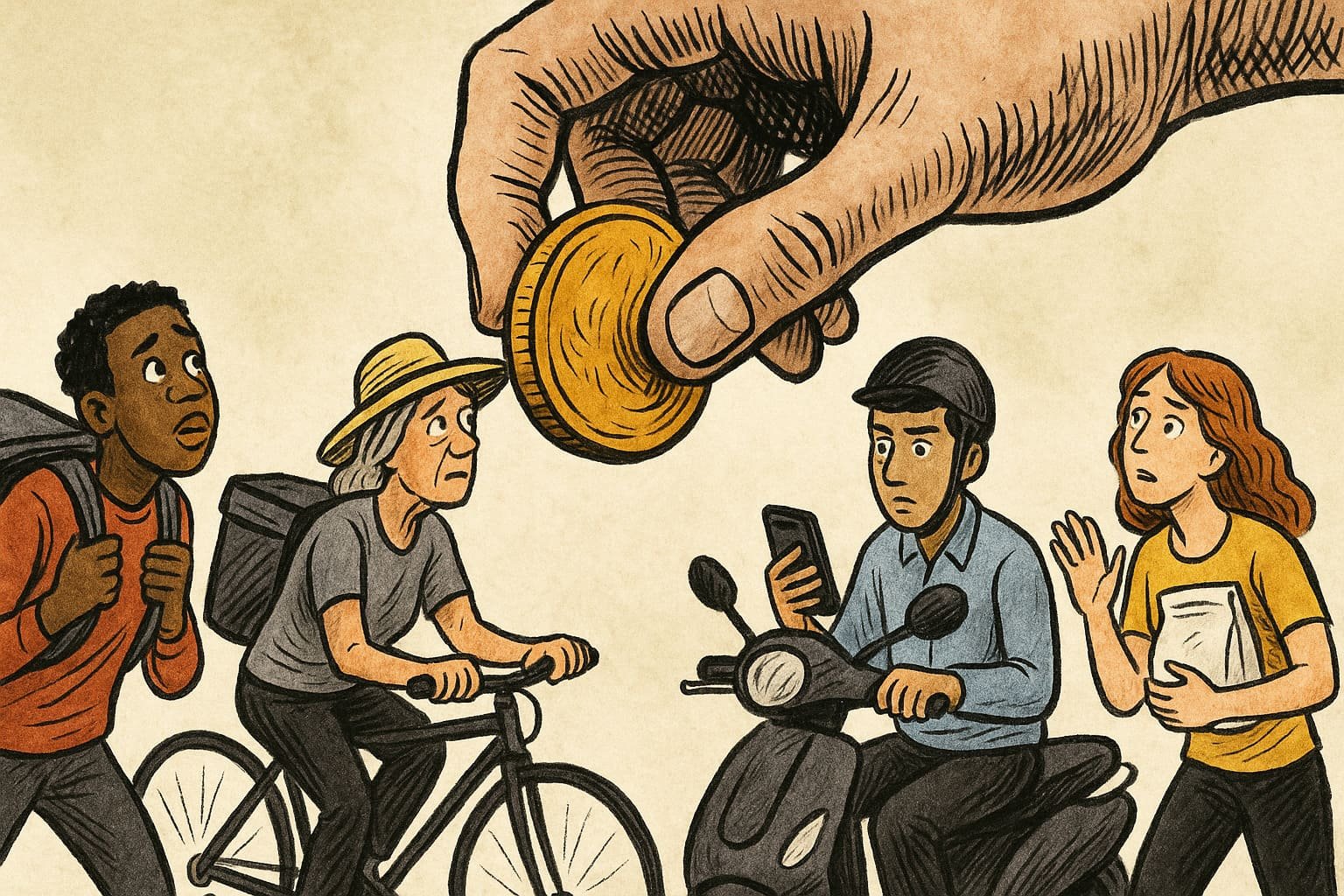
Picture this: A food delivery cyclist weaves through rush-hour traffic with a backpack twice their size. On the other side of town, a freelance coder uploads her latest project at midnight, juggling gigs across three continents from a laptop perched on a rickety kitchen table. A rideshare driver in a city he’s never visited before, taking orders from an algorithm, dreams of building his own business with every five-star review. The gig economy, with its shiny promise of freedom and hustle, has turned the working world upside down.
Entrepreneurs and startup founders chant mantras about disruption, speed, and democratizing work. They build platforms that connect, scale, and cut out bureaucracy. Every new app sells a vision of empowered “independent” workers and frictionless commerce. But behind the screen, behind the carefully curated hashtags, lies a question few dare to ask: Is this gig-driven revolution actually giving more power to self-starters, or is it quietly turning ambition into exploitation?
The truth is sticky, complicated, and full of contradictions. Some see the gig economy as a springboard to entrepreneurship, a passport to autonomy and upward mobility. Others see it as a trap, a low-wage, no-benefit race where the only guaranteed winner is the platform itself. Today, we pull back the curtain on the gig economy breaking down its myths, exposing its hidden costs, and asking the hard questions every entrepreneur, worker, and consumer needs to consider. Get Strapped Up. The ride is just getting started.
Quick Notes
- The gig economy creates new opportunities for entrepreneurial ventures but also raises critical questions about worker security and fair compensation.
- Many workers use gig jobs to build freedom, yet face unpredictable income, limited benefits, and challenging working conditions.
- Entrepreneurs gain flexibility and scalability, but risk ethical blind spots as platforms grow and evolve.
- Real-life stories reveal both inspirational successes and heartbreaking pitfalls within gig platforms.
- Balancing profit and ethics will define the next era of the gig economy where conscious leadership, policy, and community-driven solutions are more urgent than ever.
Gig Economy Hype: Disruption or Deception?
Venture capitalists pitch the gig economy as the ultimate win-win. Founders boast about lean startups, rapid growth, and a workforce eager to sign up on their own terms. Every successful app claims to shatter the old, rigid job market. It sounds like a revolution a way for anyone to monetize their skills, break out of nine-to-five chains, and write their own story.
Uber, DoorDash, and TaskRabbit became household names not just because of clever branding, but because they tapped into an itch for more autonomy. Suddenly, with nothing but a smartphone, anyone could start earning. The romance of the side hustle exploded. Young professionals in every city started calling themselves “micro-entrepreneurs,” imagining themselves as CEOs of Me Inc.
Yet for every viral founder story, there’s a wave of voices who never make the headlines. Critics argue that platforms benefit most from a relentless churn of labor, quietly pocketing profits while gig workers chase jobs that rarely add up to a stable living. The tech platforms celebrate their armies of “partners,” but offer little in terms of safety nets or upward mobility.
Entrepreneurs often find themselves caught in a strange bind celebrated as disruptors while also accused of fueling a modern gold rush that leaves some behind. It’s a paradox that isn’t easy to solve, and it begs a tough question: Is gig entrepreneurship building a new path to wealth, or just finding clever ways to avoid responsibility?
Sifting through the hype, it’s clear that disruption comes with costs, and the lines between freedom and exploitation are often blurry.
The Worker’s Gamble: Autonomy or Anxiety?
Gig workers are everywhere: delivering, coding, driving, tutoring, walking dogs, and more. They are the heartbeat of platforms, the faces behind the apps. The dream is seductive flexibility, control, and unlimited earning potential. The reality, though, is rarely so simple.
One driver in Los Angeles, Ahmed, shared how gig work helped him escape the monotony of factory shifts. He loved the freedom to choose his hours. But the thrill wore thin when earnings fluctuated wildly. Bonuses, surges, and app updates changed the game daily. The hustle that once felt empowering became a source of anxiety.
Many freelancers jump into gig work hoping for better balance, only to find themselves working at all hours just to cover the basics. No paid leave, no health insurance, no retirement safety net. Every gig is a gamble sometimes a jackpot, often a letdown. Even the most talented risk burnout chasing the next opportunity.
The algorithms that promise efficient matching can also dictate work in ways that feel dehumanizing. If your ratings drop, if you miss a ping, the platform might freeze you out. It’s autonomy, but on a tightrope.
A freelance designer, Maria, started on Fiverr to build a portfolio, dreaming of going solo. Years later, she found herself trapped, underpricing her work to stay competitive. The autonomy she sought morphed into a precarious grind.
Gig work offers a taste of freedom, but the menu rarely lists the emotional cost. For every success story, there’s a lesson in vulnerability and volatility.
Entrepreneurship Unleashed: Innovation or Abdication?
For founders, the gig economy is a sandbox unlimited talent, flexible scale, rapid growth, and low overhead. Startups can launch with fewer employees, tap global labor pools, and pivot at breakneck speed. This new playbook is seductive for ambitious entrepreneurs aiming for big dreams with minimal baggage.
Consider Logan Green, co-founder of Lyft, who envisioned a peer-to-peer ride-sharing network to unclog cities and give drivers better options. The idea worked sort of. While some drivers built loyal customer bases and steady incomes, others struggled to make ends meet in oversaturated markets.
Founders love to highlight the gig economy’s ability to empower self-starters and expand access to entrepreneurship. For many, gig work is the first rung of the entrepreneurial ladder. Side gigs become micro-businesses, with workers launching their own brands, consulting firms, or creative projects after gaining experience and capital.
But there’s a darker edge. As gig platforms mature, entrepreneurs can lose sight of the human beings powering their ventures. The race for user acquisition and investor attention sometimes means cutting corners on worker protections. Policies lag, and abuses emerge: low pay, sudden account deactivations, opaque algorithms.
Founders who once sold a dream of empowerment can unintentionally become the very bosses they set out to disrupt. The gig economy’s legacy will depend on whether today’s entrepreneurs choose short-term wins or long-term trust.
Successes and Setbacks: The Real Faces of Gig Work
The gig economy is not a monolith; it’s a universe of human stories. For every headline about platform billionaires, there’s a kitchen table full of risk, hope, and uncertainty.
Take Jasmine, a single mom in Atlanta who started driving for Instacart between school runs. Within a year, she turned a part-time side gig into a thriving personal shopping business, building a loyal client list that gave her real autonomy. Her story is one of transformation gig work as a springboard to something more.
On the flip side, Carlos, a rideshare driver in Chicago, spent months hustling to make ends meet. Sudden app changes cut his earnings overnight, leaving him with mounting bills and little recourse. His experience highlights the fragility of gig-based income and the difficulty of building stability when platforms hold all the cards.
Creative professionals face similar ups and downs. The gig economy has opened doors for musicians, writers, and artists who once relied on gatekeepers. Yet the race to the bottom on pricing can make it hard to sustain a living, let alone thrive.
Some gig workers band together, forming collectives or digital unions to push back against exploitative practices. These movements are rewriting the script, demanding fairer pay, transparency, and a voice in platform policies.
The truth is messy: the gig economy produces both meteoric rises and heartbreaking setbacks, with every participant gambling on their own resilience and ingenuity.
The Road Ahead: Building a Fairer Gig Future
The gig economy stands at a crossroads. Entrepreneurs and policymakers alike face a choice: keep extracting value at any cost, or reimagine the future of work as a shared enterprise. There is no easy answer but the next chapter will be written by those willing to ask harder questions.
Forward-thinking founders are already experimenting with new models. Some platforms, like Stocksy or Fairbnb, distribute profits among workers, treating them as true partners. Others invest in upskilling, offering benefits or career advancement for high-performing contributors. The goal: build ecosystems that balance innovation with dignity.
Regulators are waking up, too. Debates about worker classification, minimum wage, and portable benefits are gaining steam worldwide. The gig economy’s biggest threat isn’t regulation it’s a failure to evolve. Startups that build trust, transparency, and reciprocity into their DNA will outlast the rest.
The rise of platform cooperatives where workers own a stake in the enterprise signals a hunger for more equitable solutions. These ventures prove it’s possible to profit and empower, to innovate without exploitation.
As consumers, we’re not off the hook. Every tap, swipe, or order is a vote for the world we want to build. Supporting ethical platforms, tipping generously, or amplifying worker voices can nudge the entire system toward balance.
If the gig economy is truly a revolution, let’s demand more than empty slogans. Let’s build a future where hustle leads to hope, not hardship.
Revolution or Mirage: Who Wins the Gig Economy Game?
The gig economy is not just a chapter in business history it’s a mirror reflecting our deepest ambitions and anxieties about work. For entrepreneurs, it offers a once-in-a-generation chance to launch, scale, and disrupt at speed. For workers, it promises freedom and flexibility, but often delivers unpredictability and stress. The lines between opportunity and exploitation, autonomy and anxiety, are still being drawn one app update, one gig, one policy at a time.
As the world tilts toward platform-powered labor, the questions grow louder. Will the gig economy fulfill its promise as an engine of entrepreneurship, or ossify into a new caste system of disposable workers? Will startups lead with conscience, or chase scale at any cost?
The next wave of business legends will be those who solve this riddle founders, leaders, and workers who build for both profit and people. In the end, the gig economy can be a force for good, but only if we stay awake to its trade-offs and fight for fairness every step of the way.
So here’s the challenge: As you order your next ride, meal, or freelance project, ask yourself are you fueling a system that empowers or exploits? The answer will shape the future of work for us all.
