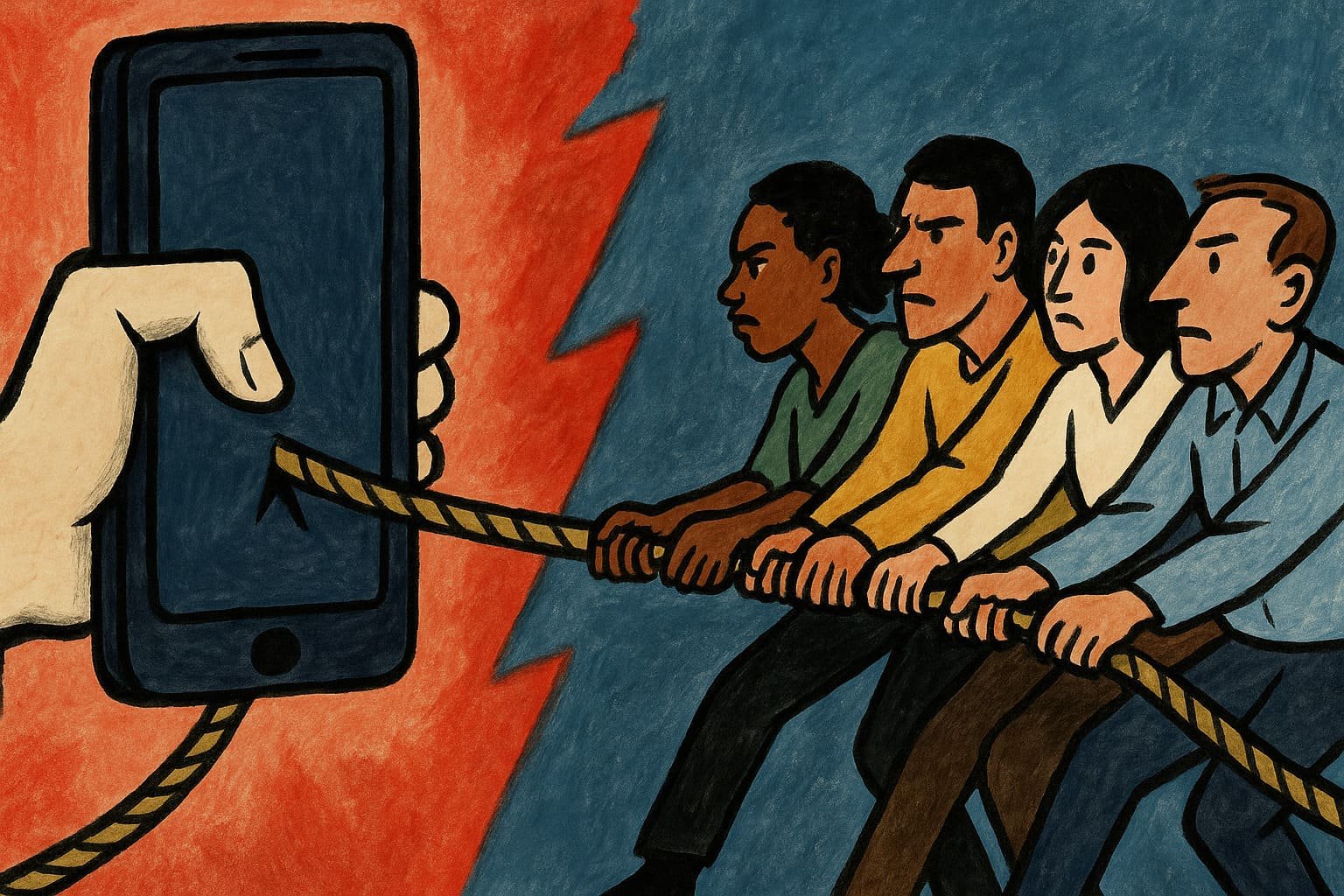
Spotlights cut through the darkness, illuminating hundreds of faces bathed in the pale glow of glass screens. The city outside hums with digital life, its heartbeat measured not in time but in swipes, likes, and streaming pixels. In this arena, identity is not a given but a spectacle; performed, filtered, and refreshed in real time. Somewhere in the back, a teenage gamer in a crowded Nairobi café logs into a virtual world, choosing a new avatar as easily as others change shoes. At a glitzy product launch, influencers hold up their phones, rehearsing their smiles, each second choreographed for the ruthless gaze of millions.
No one tells you when the real contest for selfhood begins. It’s not the first time you’re tagged in a blurry photo or the morning you wake up to a viral post in your name. The digital divide is no longer about internet cables or missing infrastructure. It has become an invisible chasm, splitting people from their own narratives and fragmenting what it means to be whole. The rules keep shifting, and the currency is attention; often stolen, rarely given freely, sometimes weaponized.
Old philosophers once warned about the dangers of borrowed opinions, but they never imagined the TikTok era, where even heartbreak is monetized. Every click, every scroll, feels loaded with invisible consequences. Brands whisper about authenticity, but the air is thick with the scent of algorithms and invisible auctions for your soul. At the edge of the dance floor, a tech worker named Mira checks her notifications, searching for meaning in a cascade of emojis.
It’s the taste of cold coffee at midnight, the sharp glow of blue light against tired skin, and the endless hum of voices telling you who to become. The pressure doesn’t come from above but seeps in sideways; through comments, pop-up ads, and the endless parade of curated lives. To survive this storm is to wrestle with the ancient question: Who owns your story in a world that never sleeps?
A hush falls as the stage lights fade, leaving behind only the pulse of digital life and the echo of a challenge: In this age of fractured reflections, can anyone truly claim their own face? This is the ruthless battle for selfhood, and the outcome remains unwritten.
Quick Notes
- The Infinite Mirror: Identity is no longer private; everyone is a performer in a world built for spectators. In this battle for selfhood, what you show and what you hide are both up for sale. Every notification is a call to audition.
- Stoic Survival Skills: The ancient tools of resilience; acceptance, clarity, focus are now digital armor. Learning when to disconnect, ignore, or embrace discomfort isn’t just helpful, it’s vital.
- Algorithm Anxiety: Attention has become the world’s most valuable resource. Algorithms know more about you than your neighbors. If you don’t set boundaries, someone else profits from your confusion.
- Case Studies in Courage: Real people are carving out meaning in the noise. From anonymous coders who quit social media to founders who ban smartphones at work, the divide is crossed only by the brave.
- Reclaiming the Narrative: To win the battle, you must write your own story. The future belongs to those who see the system, question its scripts, and choose connection over performance.
The Infinite Mirror—Identity in an Age of Endless Eyes
Step into any busy street and witness a parade of faces, each one half-lit by the glow of a device. Social media has become an infinite mirror, amplifying the best moments and muting the rest. Every day, billions perform tiny acts of self-creation, hoping for approval that fades faster than morning fog. What once felt private now belongs to the crowd, a vast audience always waiting for the next episode.
On the other side of the screen, influencers like Reece Munene turn heartbreak into hashtags, spinning personal pain into viral gold. Fame flickers, applause rises and falls, but selfhood erodes quietly, lost in the algorithms’ endless appetite. For the ordinary user, every post is a negotiation, every photo a gamble on relevance and belonging. Even the act of silence is interpreted, analyzed, and sometimes punished.
Anxiety swirls beneath the surface: Who are you if no one is watching? Which version of yourself deserves to go live? The philosopher Epictetus warned about giving away power over your own mind, yet today, a single like can change a mood, a trending hashtag can shift an entire identity. A young startup founder in Berlin confessed to deleting her apps on weekends, craving silence over the applause.
At its worst, the digital mirror fractures reality into a thousand performative pieces. People curate their friendships, measure their happiness, and hide their failures. Behind every viral dance or witty meme, someone is wondering if they’re good enough. It’s exhausting, exhilarating, and strangely addictive; the digital divide splits not just access, but the soul itself.
Brands, platforms, even governments now shape identity with ruthless efficiency. Facial recognition and AI-driven feeds turn choices into predictions. In this new world, selfhood is never static. It’s negotiated, broadcast, and sometimes lost in the scroll. The mirror reflects, but it also distorts, leaving behind questions that haunt every scroll and click.
Ancient Resilience for Modern Minds
Not every battle can be won by fighting. The old Stoics; Seneca, Marcus Aurelius, Epictetus; understood the chaos of crowds, even before crowds turned digital. Their wisdom now reads like a survival guide for anyone with a Wi-Fi signal. Acceptance of what you can’t control, clarity in chaos, and focus on the present are more than buzzwords; they’re shields against the noise.
A customer support manager named Isla carries her own digital storm. Each day, she faces a flood of angry tweets and chat requests, but refuses to let it pierce her peace. Her secret isn’t a productivity hack but a Stoic mantra: “What’s outside my control cannot touch my soul.” She laughs about it with colleagues, but behind her humor is a fierce commitment to mental boundaries.
Discomfort is everywhere online; criticism, outrage, FOMO, envy. It’s tempting to chase every notification, defend every comment, and join every trending argument. The Stoic answer isn’t to unplug or disappear, but to choose your battles with ruthless clarity. You can decide where your attention lands, even if the platforms disagree.
Case studies from global leaders echo these lessons. Jack Dorsey meditates in silence, Satya Nadella writes gratitude lists, and thousands of anonymous creators set digital curfews. They aren’t fleeing the world but building habits to survive it. The divide may be digital, but the defense is as old as philosophy.
Somewhere in San Francisco, a startup bans Slack after 6 p.m. The founder jokes about it, but deep down knows the truth: If you don’t guard your mind, someone else will rent it for their profit. In the battle for selfhood, resilience is not a buzzword but a blade.
Algorithm Anxiety—Who Owns Your Attention?
The new currency is attention, and the price is your peace. Algorithms are silent puppeteers, learning your fears, your cravings, and your hidden shame. They shape your feed, predict your next scroll, and nudge your emotions like invisible hands. In this economy, confusion is profitable and distraction is the product.
One evening, a marketing analyst named Victor realized his “For You” page knew more about his heartbreak than his closest friends. He laughed, then shivered. Every time he reached for his phone, it felt like flipping a coin; would today’s scroll bring joy or shame? The platforms didn’t care, as long as he kept watching.
Boundaries become an act of rebellion. Some users now schedule “tech fasts,” deliberately walking into parks without their phones. Others use old-school paper planners, drawing a line between themselves and the endless feed. These rituals don’t always work, but the attempt is itself an act of self-respect.
Attention isn’t just lost; it’s taken. Brands compete to outwit your brain, serving content engineered for maximum stickiness. The result is a kind of algorithm anxiety, a low hum of unease that lingers long after the screen goes dark. In the words of digital ethicist Tristan Harris, “If you’re not paying for the product, you are the product.”
Yet every day, people resist. They choose newsletters over push notifications, conversations over comment threads, and meaning over momentum. It’s not a total victory, but it’s proof the battle isn’t lost. Selfhood, once thought to be an unbreakable core, is now a daily act of defiance.
Real Courage—Stories from the Digital Divide
Across the globe, the digital divide is not a theory but a daily struggle. Some rise, others stumble, but everyone has skin in the game. The stories that stick aren’t always dramatic; they’re often small acts of courage, repeated in private.
There’s an anonymous coder in Seoul who deleted every app and re-learned boredom. He built a personal library instead, sharing it with friends who came for the books but stayed for the conversation. A famous chef in Paris installed a “phone basket” at the entrance of her restaurant, trading photos for presence and earning a devoted following.
For young people in under-resourced communities, the divide is also literal. In parts of India, students climb trees to get Wi-Fi, recording lectures to share with friends. Their resilience is a lesson in grit, not just access. Every story is a reminder: The digital divide is as much about courage as connectivity.
Even at the highest levels, leaders are rewriting the rules. Satya Nadella of Microsoft, once overwhelmed by his calendar, now schedules blocks for thinking—no devices, no interruptions. He credits this discipline with transforming both his leadership and his peace of mind.
These stories remind us that the divide is not destiny. It’s a landscape to be crossed, not a prison to endure. The journey belongs to those willing to challenge the script and live with intention.
Reclaiming the Narrative—Writing Your Own Story
Nothing matters more than the story you tell about yourself. In the age of the digital divide, narrative is both shield and sword. Those who passively accept the scripts written by platforms, brands, or even friends, surrender the most precious thing they have; their own meaning.
A high school teacher in Lagos uses WhatsApp not for gossip but to teach poetry, weaving local stories into global themes. Her students perform spoken-word contests, reminding the world that stories outlast platforms. She laughs when people call her old-fashioned. For her, the future is about reclaiming the narrative, one voice at a time.
Every click, every like, every share writes a sentence in your story. The difference is intention. It’s not about perfect curation or deleting your online presence, but about making choices with your eyes open. Which moments deserve an audience? Which ones belong only to you? Each answer builds a new kind of resilience.
Philosophers from Zeno to Camus argued that meaning is made, not found. The digital world is noisy, but meaning lives in the spaces you protect. The best stories aren’t the ones that trend, but those that are true—shaped by your own hands, told in your own voice.
In the ruthless battle for selfhood, the winners aren’t the loudest or the most followed. They are the ones who remember how to listen to themselves. They reclaim the narrative, one imperfect, authentic moment at a time.
Unmasking the Abyss: The Final Reckoning
Inside an abandoned train station, echoes fill the air; shoes scuffing on cold stone, the tap of rain on shattered glass, the soft buzz of a dying phone. Shadows stretch across the floor, each one the ghost of a persona worn too long. At the center, a young woman stands, torn between the avatar she once built and the stranger reflected in a cracked window. Her story, told in snippets and soundbites, finally falls silent.
A breeze slips through broken doors, carrying the scent of rain and something older; possibility, perhaps, or the promise of a new beginning. She drops her phone onto the concrete, the screen flickering before fading to black. Around her, the world holds its breath. She steps away from the shadows, uncertain but unburdened, and the air feels lighter than it has in years.
In the distance, a neon billboard blinks, asking a question nobody can ignore. Every eye in the city waits, hungry for an answer that can’t be found online. It’s not applause she seeks, but freedom. The freedom to become whole again.
The train never arrives, but she doesn’t wait. Her footprints disappear in the rain, each one a quiet rebellion, each one a choice. All that remains is a single question, floating above the ruins:
What would happen if you stopped performing and finally reclaimed your own story?
Partnered. Provocative. Worth Your Scroll.
This is a Promoted Post by ESYRITE—yes, it’s paid, but never filtered. Our voice stays raw, real, and razor-sharp. We team up with bold ideas, game-changers, and stories that spark something real. If it’s here, it earned its place—no fluff, just impact. We don’t just promote—we provoke. Stay sharp. Dive deeper.
