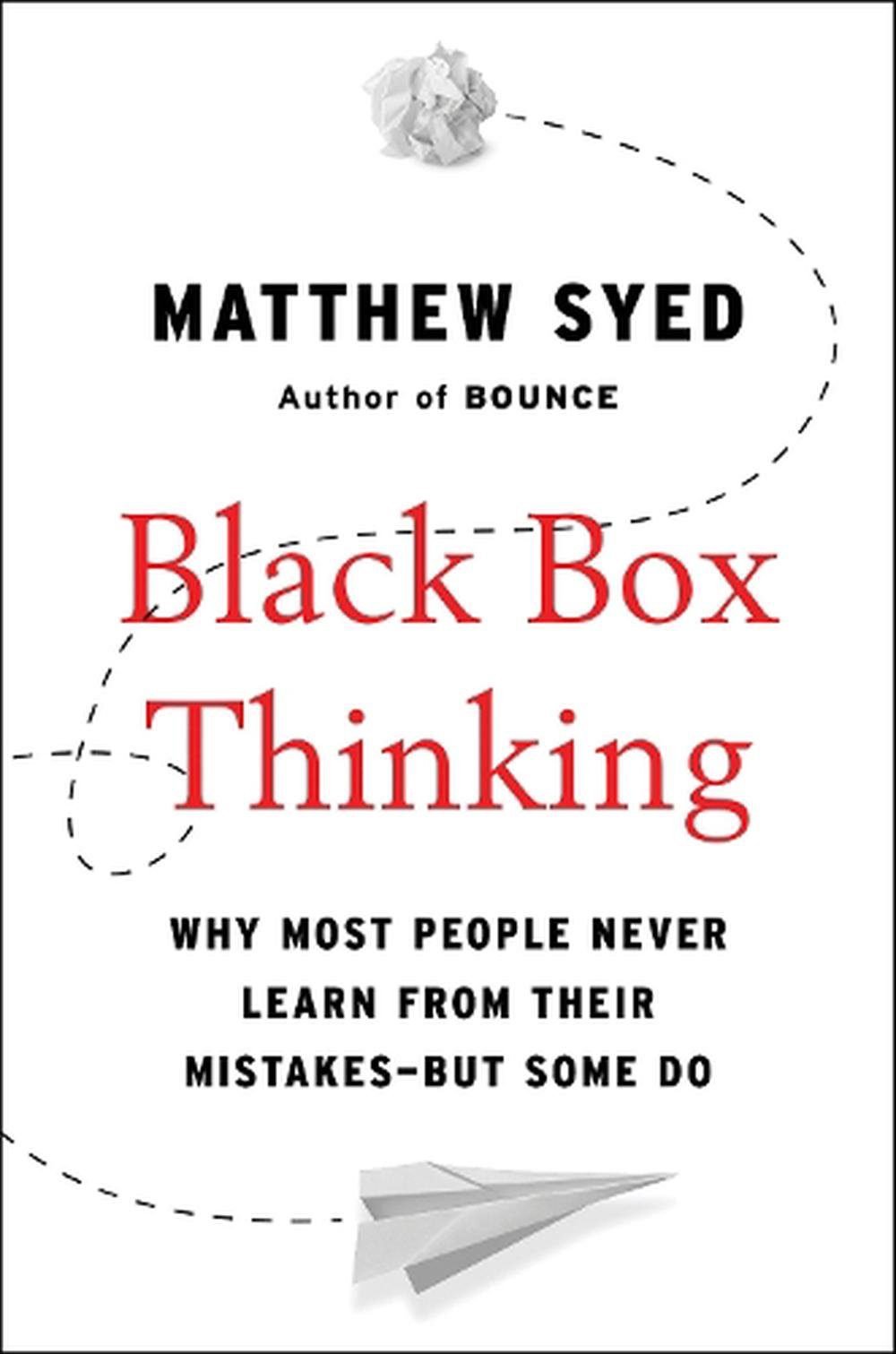
Failure isn’t just a dirty word—it’s the beating heart of progress. That’s the pulse pounding through Matthew Syed’s Black Box Thinking: Why Most People Never Learn from Their Mistakes–But Some Do. Published in 2015, this provocative book breaks the silence surrounding error and learning, revealing why some leaders, organizations, and even entire industries rise after setbacks while others remain stubbornly grounded. Syed turns the spotlight on the hidden systems and mindsets that separate breakthrough innovation from repeated disaster, offering a playbook for anyone who wants to outgrow mediocrity and cultivate real mastery.
Across boardrooms, hospital wards, and Olympic arenas, the true cost of avoiding mistakes is measured in lives lost, careers stalled, and opportunities wasted. Syed’s narrative pulls readers through real-world cases—airline crashes, medical blunders, criminal investigations—each one a testament to the idea that the best performers don’t avoid failure, they mine it for insights. Instead of ducking responsibility or hiding flaws, elite teams analyze their “black boxes” with forensic curiosity, turning every setback into a stepping stone for relentless improvement.
What sets Black Box Thinking apart from most business books is its gritty honesty. Syed’s storytelling is sharp, urgent, and sprinkled with moments of wit, making even painful lessons feel oddly empowering. The book refuses to coddle readers or offer quick fixes. Instead, it dares you to confront your own blind spots and the quiet culture of denial that infects so many organizations. The power of Syed’s argument is clear: our willingness to embrace error is the secret ingredient of growth, not a sign of weakness.
Throughout the book, Syed contrasts the aviation industry’s obsession with learning from crashes against the healthcare sector’s often tragic avoidance of accountability. These stories, backed by data and chilling anecdotes, highlight a universal principle: the cost of not learning is far higher than the price of admitting a mistake. By blending psychological research, business case studies, and unforgettable real-life stories, Syed shows why building a culture of candor and curiosity is the real competitive advantage.
If you’ve ever wondered why your team keeps stumbling over the same obstacles, or why innovation stalls in the face of setbacks, Black Box Thinking delivers the answers in a style that is both entertaining and actionable. This review breaks down the book’s most explosive insights, shares vivid case studies, and unpacks the tools readers need to turn every error into an asset. Prepare for a mind-expanding ride through failure, learning, and the DNA of high performance.
Quick Notes
- Learning Loves Failure: Progress only happens when individuals and organizations treat mistakes as precious data, not as shameful secrets.
- Systems Trump Blame: High performers build feedback loops and systems that reveal errors quickly, instead of scapegoating or covering up.
- Mindset Matters: A growth mindset—believing you can learn and improve—unlocks the courage to experiment, iterate, and adapt.
- Transparency Fuels Safety: Openly reporting and analyzing errors, as seen in aviation, leads to breakthrough safety and innovation gains.
- Denial Destroys Progress: Cultures that punish mistakes become stagnant, while those that embrace feedback create lasting success.
How Black Box Thinking Redefines Success
Matthew Syed cracks open the vault of failure, exposing how the world’s most effective teams harness the lessons of their darkest moments. The book’s opening chapters introduce the black box metaphor, borrowed from aviation’s crash investigation technology. Syed paints a vivid picture of how airlines pour over every incident, extracting hard-won wisdom from disaster to prevent the next tragedy. This willingness to scrutinize mistakes becomes the benchmark for learning culture, standing in sharp contrast to other sectors.
Healthcare provides a sobering counterpoint. Syed details the harrowing stories of doctors and hospital systems that, driven by fear of litigation or professional embarrassment, hide or rationalize errors. The tragic consequence: patients suffer, the same mistakes repeat, and the cost in human life is staggering. These gripping accounts are not meant to shame but to spotlight the hidden opportunity—every mistake is a clue, if only we’re brave enough to look.
Throughout the book, Syed demonstrates how innovation, whether in sports, business, or science, is powered by a relentless willingness to experiment, fail, and refine. He draws on the careers of world-class athletes, NASA engineers, and criminal justice reformers, showing that success rarely comes from genius alone. Instead, it’s the product of humility, data-driven feedback, and unshakeable curiosity.
Syed is quick to acknowledge the emotional sting of failure. But he insists that the greatest risk lies in denial, not error. By presenting failure as an inevitable and even necessary step on the path to improvement, Syed reframes mistakes as a vital part of the growth process. He highlights organizations that thrive precisely because they out-learn the competition, not because they outsmart it.
In the final chapters, Syed distills practical strategies for building a “black box culture.” These include psychological safety, structured feedback, and radical transparency—tools that empower teams to turn even the ugliest failures into the seeds of progress. Readers are left with a new lens for viewing setbacks: not as defeats, but as data points on the map to mastery.
Key Lessons and Insights to Learn: Turning Setbacks into Superpowers
Mistakes are not the enemy—they are the fastest path to improvement. Syed introduces readers to a British cycling team that rose from obscurity to global dominance by obsessively tracking and learning from every error, tweak, and loss. This “marginal gains” philosophy, now a legend in sports and business, proves that tiny course corrections compound over time into unstoppable success.
Building feedback loops beats pointing fingers every time. Syed brings to life the story of the aviation industry, where pilots and engineers created non-punitive reporting systems. By focusing on fixing systems instead of blaming individuals, airlines have made flying one of the safest forms of travel on earth. Organizations that fail to capture and act on feedback, by contrast, become trapped in cycles of denial and mediocrity.
A culture of openness and psychological safety transforms how teams respond to adversity. Syed’s examples of leading hospitals and tech firms reveal that employees are more likely to report and learn from mistakes when leaders respond with curiosity rather than punishment. Google’s Project Aristotle study is cited, showing how psychological safety predicts team success better than intelligence or experience alone.
Embracing a growth mindset turbocharges personal and collective growth. Syed leans on research from Carol Dweck and others to argue that individuals who view abilities as improvable are more likely to persist, experiment, and ultimately break through barriers. Real-life examples from sports to entrepreneurship illustrate the power of persistence and learning over talent alone.
Transparency creates trust and accelerates learning. When organizations—whether hospitals, airlines, or even police departments—make their mistakes and fixes visible, the entire system improves. Syed’s interviews with whistleblowers and reformers show that candor, though sometimes painful, is the cornerstone of meaningful progress.
Real-World Case Studies: Lessons from the Black Box
The British cycling revolution is one of the book’s most compelling stories. By meticulously recording and analyzing every failure, coach Dave Brailsford and his team turned incremental improvements into gold medals. The story captures how a culture of learning, not just elite talent, produced results that stunned the world.
In medicine, Syed spotlights the tragic case of Elaine Bromiley, a routine surgery patient whose death could have been prevented if the surgical team had felt empowered to speak up about mistakes as they unfolded. Her husband’s campaign for medical transparency and training led to major reforms and a cultural shift in UK healthcare. The story highlights how secrecy and fear cripple progress, while openness saves lives.
Airline disasters, such as the crash of United Airlines Flight 173, are dissected to reveal how black box analysis transformed pilot training and cockpit procedures. The aviation industry’s insistence on learning from every near-miss now sets the global standard for safety and error management.
Innovation in tech and entrepreneurship gets the Syed treatment too. Companies like Google and Pixar are praised for their commitment to post-mortems and transparent reviews, where team members freely dissect both flops and wins. This institutionalized learning loop feeds creativity and sustained market leadership.
Even criminal justice systems make an appearance, with Syed exploring the pitfalls of wrongful convictions and the slow, often painful journey toward forensic science reform. The moral: only by admitting and fixing mistakes can justice prevail, and public trust be restored.
Critical Insights for Leaders, Innovators, and Everyday Learners
Leaders set the tone for how mistakes are handled. Syed shows that when bosses punish error, teams hide information, stifling innovation and growth. Conversely, leaders who reward honesty and learning create organizations that adapt and outpace rivals.
Psychological safety is the bedrock of experimentation. Teams that know they can speak up without fear of reprisal are more likely to share bold ideas, report problems early, and recover quickly from setbacks. This insight is backed by both Syed’s research and real-world business turnarounds.
Learning from failure demands humility. Whether you’re running a startup or captaining a ship, the willingness to admit gaps in knowledge—and actively seek feedback—distinguishes the competent from the complacent. Syed’s stories illustrate that humility is a competitive advantage, not a liability.
Systems, not individuals, are usually the root cause of recurring mistakes. By focusing on process improvement rather than witch hunts, organizations fix the true source of errors and foster continuous improvement. Syed’s aviation and healthcare examples hammer this lesson home.
Continuous iteration is the secret to sustained excellence. Success is rarely the product of a single breakthrough. Instead, it’s the outcome of countless small tweaks, analyzed failures, and rapid adaptation. Syed’s approach turns “trial and error” into an engine for lasting achievement.
The Black Box Mindset—Are You Brave Enough to Learn?
Matthew Syed’s Black Box Thinking is more than a book—it’s a manifesto for a new way of working, leading, and living. The stories within these pages shatter the illusion that brilliance is innate and unchangeable. Instead, Syed makes a case that greatness is built on a mountain of mistakes, each one dissected, understood, and put to work.
The most memorable lesson is simple but profound: failure is information, not damnation. The most innovative organizations and individuals don’t fear falling—they fear standing still. Syed’s insights push readers to ask hard questions about their own blind spots and to demand more transparency, feedback, and accountability at every level.
Real transformation, both personal and collective, depends on our ability to own our errors and grow from them. The book’s blend of storytelling, data, and actionable frameworks makes it a must-read for entrepreneurs, executives, educators, and anyone obsessed with progress. Syed’s style is both entertaining and deeply practical, making big ideas stick long after the book is closed.
This is a book for the bold—for those willing to scrap outdated habits, question sacred cows, and embrace a more honest, resilient way to succeed. Black Box Thinking delivers more than theory: it hands you the tools, the case studies, and the mindset to become unshakeable in the face of setbacks.
Hungry for more radical insights and actionable guides? Keep reading ESYRITE reviews for the books that change industries, teams, and lives—one hard-won lesson at a time.
About the Author
Matthew Syed is an acclaimed journalist, bestselling author, and former Olympian, celebrated for his fresh takes on performance, innovation, and learning. His work regularly appears in The Times and leading global media outlets, where he tackles the psychology of success and the importance of honest, data-driven improvement. Drawing on his experience as a top-level table tennis competitor and a lifelong student of behavioral science, Syed distills complex ideas into stories that resonate with executives, educators, athletes, and everyday readers. His books, including Black Box Thinking and Bounce, have shaped conversations about resilience, learning, and the true nature of excellence.
Disclaimer
Note that the ideas and content in the book are solely from the Author of the book and not the ESYRITE Editorial Team. All opinions expressed in this book review are entirely from the ESYRITE Editorial Team. This review may contain affiliate links, meaning ESYRITE may earn a small commission if you make a purchase through these links, at no additional cost to you.
